

24/7 Pre-hospital Emergency Care
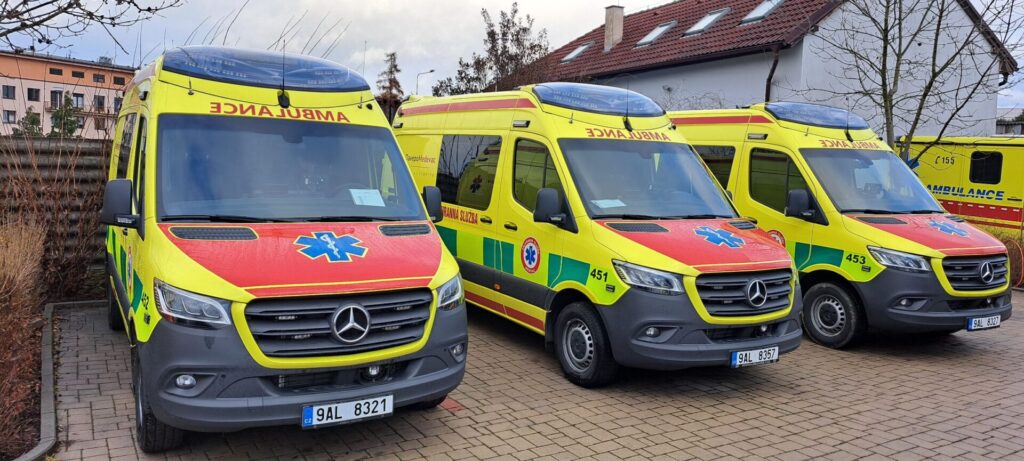
DavepoMedevac delivers 24/7 pre-hospital emergency care under contract with the Central Bohemian Region Emergency Medical Service. Our rapid-response ambulances operate from our base in Mutějovice.
Our fleet includes ambulances designed to transport immobile patients, as well as a fully equipped emergency ambulance capable of treating a wide range of urgent conditions and injuries—from major trauma and sudden cardiac arrest to imminent childbirth.
Each vehicle is equipped with a cardiac monitor/ECG and defibrillator, a ventilator, oxygen, essential medications for critical situations, and full supplies for infusions and wound care.
Our rapid-response crew consists of a paramedic (specialised post-secondary or university-trained) and an EMS driver certified through a 600-hour accredited qualification programme.
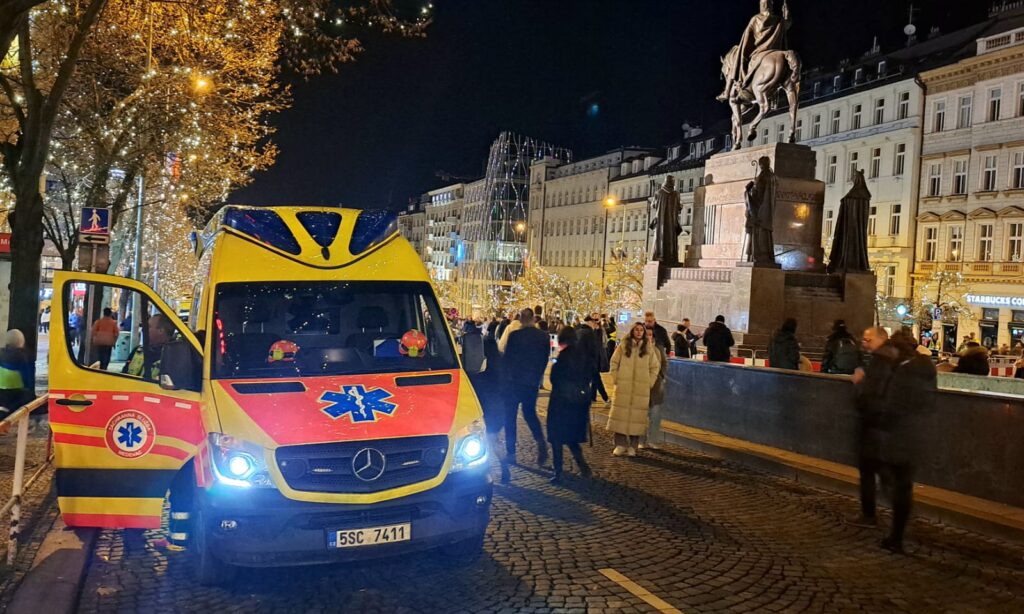
When the ambulance leaves…
It can happen to anyone—but not everyone knows what to do next. Please take a moment to read this guide. It explains what is happening to your loved one right now and what you can expect over the next hour.
Your loved one is currently in the care of the emergency medical service (EMS)—trained professionals who know exactly how to help. After providing urgent treatment at the scene, they will transport the patient to a hospital or another appropriate medical facility.
Once the ambulance has left, there is usually at least an hour before it makes sense to call the hospital for updates. In the early stages, hospital staff often won’t have confirmed information available yet.
So, check the time now. After reading this, you should still have a little time to inform close family members or friends about what has happened.
Questions you may be asking right now
A fully qualified emergency crew arrived to help your loved one—and they are trained to provide advanced medical care directly at the scene. Today, paramedics can perform many procedures on-site that used to be possible only in a hospital.
This approach is often safer and more effective for the patient. Stabilising someone before transport can be critical—especially in serious cases where an immediate “rush to hospital” could actually increase the risk. Think of an emergency ambulance as a fully equipped mobile critical-care unit, operating under strict hygiene and safety standards.
For safety and operational reasons, the ambulance can transport the patient only. The only exception is typically a parent accompanying a small child. This is why we could not allow you to travel with your loved one in the ambulance on the way to the hospital.
Your loved one is on the way to a hospital where they will receive the specialist care they need. The time spent travelling is not “lost time”—important care continues throughout the journey.
During transport, the doctor or paramedic will assess the patient in detail and prepare them for admission. If needed, they will administer medication and carry out other necessary medical procedures.
The ambulance is heading to the nearest suitable medical facility. The hospital team has been informed and is ready to receive your loved one.
Depending on their condition and symptoms, your loved one will undergo further examinations at the hospital. These assessments are carried out step by step and may include X-rays, brain imaging, blood tests, heart monitoring, and other diagnostic procedures.
Doctors need time not only to perform these tests, but also to evaluate the results and decide on the next steps. That’s why—although we know it’s difficult—we kindly ask you to be patient and wait at least one hour before calling the hospital for an update.
Thoughts like this are common in moments of shock—along with questions about whether you missed something, or whether you could have acted differently or sooner. That reaction is completely natural.
But you did the best you could for your loved one. And from the moment the emergency operator answered your call to 155, the professional emergency response chain was activated. Your loved one is now in the hands of medical professionals.
Every patient is always under the professional supervision of a paramedic or doctor.
With 6 dispatch bases, we can send the crew closest to you.
Our dispatch centre is available around the clock—including SMS support for clients with speech or hearing impairments.